
PVC Wall Panel Price Guide for Buyers
▶Table of Contents
- 1. Introduction to Modern Wall Cladding
- 2. What is a PVC Wall Panel? Material & Composition
- 3. Core Factors Influencing the PVC Wall Panel Price
- 4. Estimated Cost Breakdown by Panel Type
- 5. PVC Wall Panel Pricing Comparison Table
- 6. Installation, Accessories, and Hidden Labor Costs
- 7. PVC vs. Alternative Wall Coverings: A Comparative Cost Analysis
- 8. Step-by-Step Guide to Calculating Your Project Budget
- 9. Long-Term Return on Investment (ROI) and Maintenance
- 10. Smart Buying Strategies: Sourcing and Sifting Through Suppliers
- 11. Conclusion
- 12. Frequently Asked Questions (FAQ)
Introduction to Modern Wall Cladding
When embarking on a residential renovation or designing a commercial space, estimating the overall PVC Wall Panel Price is one of the most critical steps in the planning phase. Wall finishes represent a massive surface area in any building, meaning that your choice of material will significantly dictate both your aesthetic outcome and your structural budget. Traditional wet plastering, dry-walling, and tiling have dominated the construction market for decades. However, poly-vinyl chloride (PVC) wall systems have emerged as an efficient, highly durable, and water-resistant alternative that drastically reduces labor time and material waste.
This comprehensive buyer’s handbook is designed to unpack every element that dictates the PVC Wall Panel Price, helping you make an informed financial decision. Whether you are a property developer sourcing materials in bulk, an interior designer seeking specialized finishes, or a DIY enthusiast attempting a weekend bathroom upgrade, understanding the underlying cost metrics of these synthetic panels is key to a successful project.
By knowing how material composition, shipping logistics, and labor costs interact, you can accurately budget for your next project without overpaying, as the average PVC Wall Panel Price varies wildly based on these factors. This guide explores the engineering behind the panels, detailed price ranges per square foot across various configurations, hidden accessory fees, and a head-to-head financial comparison with traditional alternatives like ceramic tiles and wood cladding.
Ultimately, why understanding the average PVC Wall Panel Price protects your investment comes down to one simple reality: not all PVC panels are created equal. A low-cost panel might save money today, but a brittle composition can lead to cracking and discoloration, prompting early replacement. By looking at the technical specifications and cost structures in this guide, you will be prepared to select a product that balance upfront costs with long-term performance.
What is a PVC Wall Panel? Material & Composition
Before analyzing costs, it is essential to understand what you are paying for. A PVC wall panel is an extruded plastic sheet used for interior wall decoration and protection. It is manufactured primarily from a blend of polyvinyl chloride resin and calcium carbonate, along with specific stabilizers, lubricants, and pigments that enhance its physical properties. The ratio of polymer resin to calcium carbonate filler determines the structural integrity, elasticity, and impact resistance of the product.
While standard plastic sheeting is thin and flexible, a high-quality PVC Wall Panel Price reflects a robust, rigid structure engineered with hollow chambers or solid composite cores. The hollow-core design features internal web-like structures (ribs) that provide lightweight structural stability, excellent heat insulation, and sound-dampening properties. On the other hand, solid-core panels are far denser and heavier, designed to mimic the weight and solid feel of real timber or natural stone.
For those interested in exploring modern design concepts, looking into creative ideas for Interior Decoration is a great starting point to see how these panels can transform residential spaces. The versatility of PVC allows manufacturers to print incredibly detailed wood grain, marble veins, concrete textures, and geometric 3D shapes onto the surface. This design versatility is achieved via two main methods: hot stamping (transferring a design foil under heat) or direct high-definition printing followed by a protective UV-curable polyurethane lacquer coat.
Because hollow core panels are lightweight and use less raw polymer, the standard hollow PVC Wall Panel Price remains highly accessible for budget-conscious renovators. They are ideal for ceiling installations and low-impact residential walls. However, if you require impact resistance, especially in heavy traffic commercial corridors, schools, or hospitals, you will find that the solid PVC Wall Panel Price is typically higher due to the sheer density of the material and its superior resilience against punctures and scratches.
For those seeking visual depth, 3D textured designs are available, although this stylized aesthetic will increase the baseline PVC Wall Panel Price. These 3D panels are vacuum-formed from thin, high-impact PVC sheets and are often used as accent walls in living rooms, offices, and hotel lobbies to create a striking architectural focal point.

Core Factors Influencing the PVC Wall Panel Price
When shopping for wall cladding, you will notice substantial price differences between suppliers. These variations are not arbitrary; they are determined by specific chemical, physical, and logistical factors. Understanding these elements will prevent you from accidentally purchasing substandard materials or overpaying for features you do not need.
A. Polymer Density and Calcium Carbonate Ratio
First and foremost, the ratio of calcium carbonate filler to virgin polymer significantly affects the wholesale PVC Wall Panel Price. Calcium carbonate is a cheap mineral filler. When manufacturers increase the proportion of filler, the panel becomes heavier but also much more brittle. High-quality panels use a high percentage of virgin PVC resin, resulting in a flexible, tough panel that can absorb impacts without cracking. Checking the density (measured in grams per cubic centimeter) is a reliable way to verify quality; a higher density indicates a better resin ratio, which naturally commands a premium.
B. Thickness and Structural Ribbing
The physical thickness of the sheet also plays a major role; a thicker panel requires more raw materials, driving up the PVC Wall Panel Price accordingly. Typical wall panels range from 5mm to 10mm in thickness. Thicker panels offer better structural rigidity, are less prone to warping over time, and provide superior screw-holding strength if you intend to mount fixtures directly onto the panels. Additionally, the spacing and thickness of the internal ribbing inside hollow panels dictate their resistance to compression.
C. Surface Treatment and Aesthetic Complexity
Furthermore, specialized surface treatments like hot stamping or UV curable lacquers will impact the manufacturing cost, which naturally shifts the consumer-level PVC Wall Panel Price upward. A simple laminated panel utilizes a thin printed PVC film glued to the substrate. While cost-effective, it can peel in high-moisture environments. In contrast, co-extruded panels or those treated with double-layer UV lacquer offer incredible scratch resistance, colorfastness under sunlight, and chemical resistance to household cleaning agents.
D. Shipping, Weight, and Logistics
Because these panels are bulky, global freight rates and local shipping logistics can add a surprising margin to the localized PVC Wall Panel Price. If you are ordering imported panels, sea freight fluctuations, customs duties, and overland trucking fees will influence the final cost. Lightweight hollow panels are cheaper to transport, whereas heavy solid-core panels incur higher freight surcharges.
E. Brand Reputation and Certified Compliance
Finally, purchasing from an established, certified brand usually commands a premium, which is why the branded PVC Wall Panel Price might be 20% to 30% higher than unbranded alternatives. Renowned manufacturers invest heavily in quality control, ensuring their panels carry flame-retardant certifications (such as Class B1 under fire testing standards) and low VOC (volatile organic compound) emissions ratings, which are vital for maintaining healthy indoor air quality.
Ultimately, the ultimate PVC Wall Panel Price you will pay is a delicate balance of these five variables. Balancing your aesthetic needs, durability requirements, and regulatory compliance is essential before deciding on a specific supplier.
Estimated Cost Breakdown by Panel Type
To give you a clearer picture, let us examine how the PVC Wall Panel Price breaks down across different categories in today’s market. Prices are generally quoted per square foot or per panel. Standard panels are commonly sold in lengths of 8 feet, 9.5 feet, or 10 feet, with widths ranging from 10 inches to 4 feet depending on the style.
Hollow-Core PVC Panels
For entry-level residential projects, the hollow-core PVC Wall Panel Price typically ranges from $1.50 to $3.50 per square foot. These are the most common panels found in home improvement stores. They are incredibly lightweight, easy to cut with a utility knife, and feature a simple tongue-and-groove interlocking edge. They are highly popular for lining laundry rooms, garage walls, and domestic bathroom ceilings.
Solid PVC & Wood-Plastic Composite (WPC) Panels
Moving up the ladder, the solid or wood-plastic composite (WPC) PVC Wall Panel Price jumps to between $4.50 and $9.00 per square foot. WPC combines natural wood fibers with thermoplastic polymers to create a incredibly durable, heavy-duty material. For those looking for a rustic wood aesthetic, opting for a high-quality thermowall panel can be a perfect alternative, offering the texture of real wood with the moisture protection of synthetics. These panels are highly resistant to impacts, making them excellent for commercial offices, high-traffic corridors, and living room accent walls.
UV-Coated Marble Sheets
If you desire a luxury finish, the UV-coated faux marble PVC Wall Panel Price usually lands around $5.00 to $12.00 per square foot. These are typically larger sheets (4ft x 8ft) composed of a dense stone-plastic composite (SPC) core. The high-definition marble print is sealed under a thick, glossy UV-cured layer that provides a realistic stone appearance without the massive cost, weight, and installation difficulties of real marble slabs.
Fluted Panels
Similarly, the modern fluted PVC Wall Panel Price is priced by the linear foot or panel, generally averaging $6.00 to $15.00 depending on depth. Fluted panels feature alternating ridges and valleys, creating an elegant vertical texture that mimics architectural wooden slats. These are incredibly popular in modern minimalist and mid-century modern design schemes. Whether you choose a standard fluted panel or a robust thermowall option, these dimensional profiles offer excellent visual depth and can dramatically alter the perception of a room’s height.
PVC Wall Panel Pricing Comparison Table
The table below provides a quick, structured comparison of the estimated PVC Wall Panel Price by panel category, along with their primary applications, typical thicknesses, and pros and cons:
| Key Advantages | Best Suited For | Common Thickness | Est. Price (per Sq. Ft.) | Panel Type |
|---|---|---|---|---|
| Extremely lightweight, lowest cost, easy DIY setup | Ceilings, residential bathrooms, garages | 5mm – 8mm | $1.50 – $3.50 | Hollow-Core PVC |
| High impact resistance, very dense, flame-retardant | Commercial hallways, heavy-traffic areas | 3mm – 6mm | $4.00 – $8.00 | Solid PVC / SPC |
| Flawless high-gloss finish, mimics real stone, waterproof | Feature walls, hotel lobbies, bathrooms | 3mm – 4mm | $5.00 – $12.00 | UV Marble Sheet |
| Beautiful 3D textures, acoustic dampening, highly durable | Living rooms, offices, modern accent walls | 12mm – 28mm | $6.00 – $15.00 | Fluted / WPC Panels |
| UV-stable, weatherproof, co-extruded outer layer | Exterior facades, balconies, patio walls | 15mm – 25mm | $8.00 – $18.00 | Outdoor Cladding |
PVC vs. Alternative Wall Coverings: A Comparative Cost Analysis
To evaluate if this material is right for you, let’s explore how the PVC Wall Panel Price stacks up against traditional materials. When deciding on interior finishes, comparing the total lifecycle cost—comprising raw materials, installation labor, and ongoing maintenance—provides a clearer financial picture.
A. PVC vs. Drywall and Paint
While drywall has a lower initial purchase cost, the long-term PVC Wall Panel Price becomes highly competitive when you calculate the savings on painting, sanding, and future repairs. Installing drywall requires hanging, taping, mudding, sanding, priming, and applying at least two coats of paint. This multi-step process takes several days to dry and cure. PVC panels, conversely, are installed in a single pass. There is no paint, no mess, and no drying time, meaning the room can be occupied immediately, reducing costly business downtime or residential disruption.
B. PVC vs. Ceramic Tiles
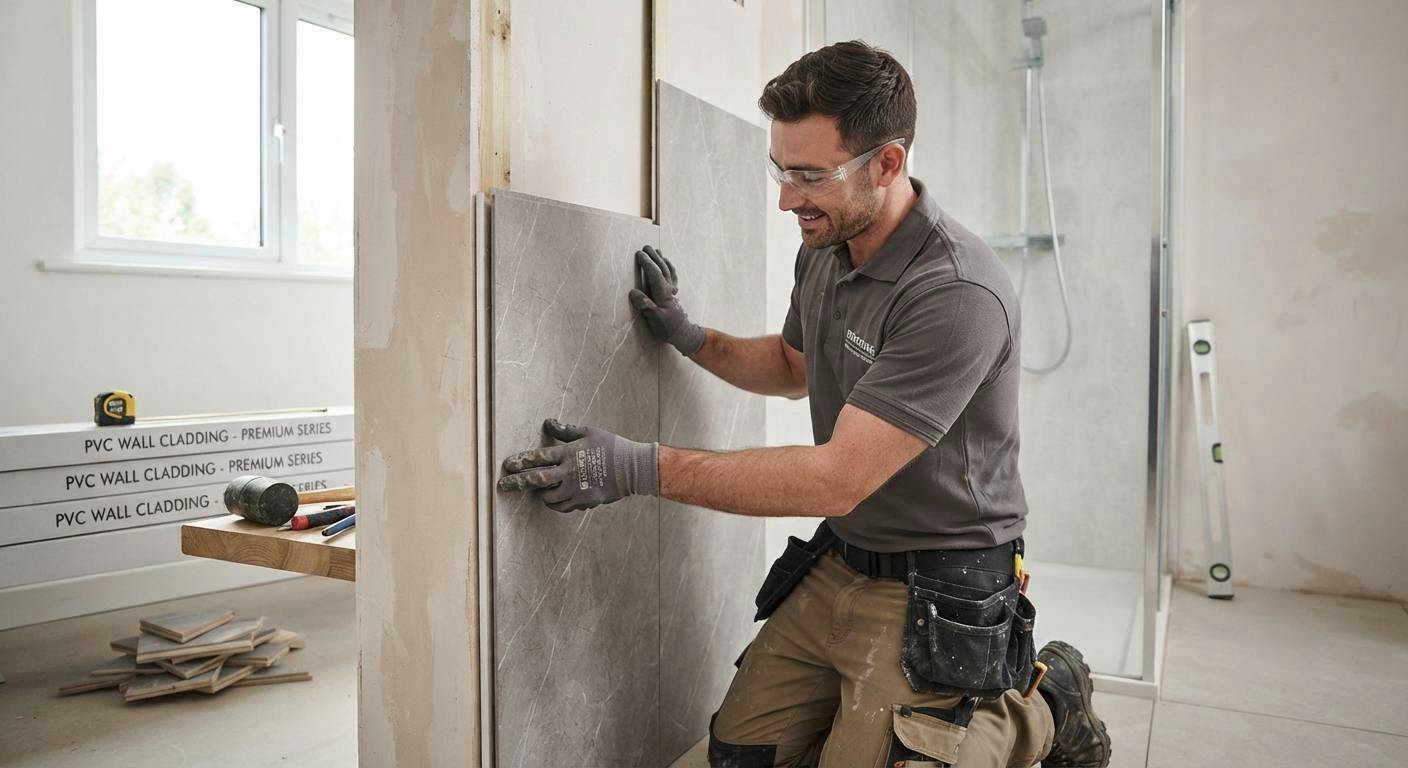
Compared to ceramic tiling, which requires expensive grout and intensive labor, the total PVC Wall Panel Price is significantly more affordable for bathrooms. Tiling requires a highly skilled tiler, specialized wet-cutting saws, cement-based adhesives, and tedious grouting. Over time, grout lines absorb dirt and moisture, leading to mold growth that requires intense cleaning or re-grouting. PVC panels offer a seamless, non-porous surface that wipes clean effortlessly, completely eliminating the mold issues associated with tiled walls.
C. PVC vs. Traditional Wood Paneling
Traditional solid timber paneling is beautiful but costly; opting for synthetic alternatives cuts your investment, as the PVC Wall Panel Price is a fraction of solid oak or walnut. Timber is also susceptible to humidity fluctuations, warping, termites, and rot, requiring regular staining, varnishing, or painting. PVC mimics these luxurious wood grains perfectly while remaining entirely impervious to rot and moisture.
D. PVC vs. Wallpaper
When contrasted with high-quality wallpaper, the initial PVC Wall Panel Price is higher, but the panel will outlast wallpaper by decades in humid environments. Wallpaper can easily peel at the seams, stain, tear, or bubble when exposed to moisture. In bathrooms and kitchens, wallpaper is rarely a viable option, whereas PVC thrives in these damp conditions.
When coordinating your walls with the ceiling, incorporating premium ceiling tiles for home can elevate the overall aesthetic. Using durable wall panels in tandem with moisture-resistant ceiling finishes ensures that your entire room is protected against steam and water damage. In the long run, this low upkeep lowers the lifetime PVC Wall Panel Price, making it a highly economical choice for both landlords and homeowners.
Step-by-Step Guide to Calculating Your Project Budget
To avoid over-purchasing or running short mid-project, calculating your required PVC Wall Panel Price budget must be done systematically. Follow these four basic steps to estimate your costs before placing an order at our Shop.
Step 1: Calculate the Total Surface Area
Measure the width and height of each wall you intend to cover. Multiply the width by the height to get the square footage of each wall, then add them together to find the total area.
Formula: Width (ft) x Height (ft) = Area (sq. ft.)
For instance, if you have four walls in a room, each measuring 10 feet wide with 8-foot ceilings:
10 ft x 8 ft = 80 sq. ft. per wall.
80 sq. ft. x 4 walls = 320 sq. ft. total.
Step 2: Account for Openings and Windows
For a standard 10×10 foot room with 8-foot ceilings, the material portion of your PVC Wall Panel Price calculation will cover approximately 320 square feet of paneling. If you have large doors or windows, you can subtract their area from the total. However, for small windows, it is often best not to subtract them, as you will need extra material to cover the window reveals and alcoves.
Step 3: Factor in the Waste Margin
Always add a 10% to 15% waste margin to your measurements, as failure to do so might require a second shipment, increasing the logistical portion of the PVC Wall Panel Price. When cutting panels around corners, pipes, and electrical sockets, some off-cuts will be unusable. Having a few extra panels ensures you can complete the job without delay.
320 sq. ft. x 1.10 (10% waste) = 352 sq. ft. of panels needed.
Step 4: Calculate Material and Accessory Costs
Multiply your total required square footage by the price of your chosen panel. Then, estimate your accessory and adhesive costs, which generally add about 15% to 20% to the raw material cost. For our example, let us assume a panel price of $4.00 per square foot:
352 sq. ft. x $4.00 = $1,408 (Raw Panel Cost)
Accessories & Adhesives (15%) = $211.20
This brings the total PVC Wall Panel Price to approximately $1,619.20 for the materials alone.
If you are renovating a large commercial space, wholesale suppliers will often reduce the unit PVC Wall Panel Price, making bulk purchases highly economical. Do not hesitate to ask for a custom volume quote if you are ordering materials for multiple rooms or large-scale commercial builds.
Long-Term Return on Investment (ROI) and Maintenance
Analyzing the PVC Wall Panel Price through the lens of long-term return on investment (ROI) reveals its true value. While paint or cheap wallpaper might seem more affordable upfront, their ongoing maintenance cycles quickly erode those initial savings. PVC wall panels are designed to be a “one-and-done” solution, offering exceptional longevity with minimal upkeep.
A. Maintenance and Cleaning Costs
Unlike painted walls that smudge and stain, or wooden panels that require periodic sanding and varnishing, PVC panels are incredibly easy to maintain. Cleaning requires nothing more than a soft cloth, warm water, and a mild liquid detergent. You do not need to buy specialized wood oils, chemical cleaners, or stone polish. This ease of maintenance saves both money and time over the lifespan of the panels.
B. Prevention of Moisture Damage
In moisture-prone spaces like kitchens and laundry rooms, the water-resistant properties of PVC justify the upfront PVC Wall Panel Price by preventing costly mold remediation. Traditional drywall absorbs moisture, leading to structural softening, paint peeling, and hazardous black mold growth. Removing mold and replacing water-damaged drywall is an expensive, disruptive process. PVC’s non-porous surface completely prevents water ingress, protecting your home’s structural framing from rot.
C. Durability and Scratch Resistance
With a lifespan often exceeding 15 to 20 years, the amortized annual PVC Wall Panel Price is practically negligible compared to repaint-heavy drywall. In commercial settings, where walls are constantly bumped by carts, luggage, and chairs, the durability of high-density SPC or WPC panels is unmatched. They resist dents, scratches, and chips, ensuring the building interior maintains a pristine, professional appearance for years without requiring patching or repainting.
Similarly, matching wall designs with ceiling tiles for home keeps the aesthetic cohesive, ensuring that both your walls and your ceilings remain clean, mold-free, and structurally sound for decades. This holistic approach to damp protection adds significant resale value to any property, as savvy home buyers immediately recognize the benefits of low-maintenance, waterproof interior finishes.
Smart Buying Strategies: Sourcing and Sifting Through Suppliers
When searching for the best deal, don’t let a suspiciously low PVC Wall Panel Price lure you into buying low-density, brittle products. The market is flooded with subpar imports that use recycled plastics contaminated with heavy metals or contain excessively high filler ratios. To ensure you receive a safe, durable product, use these professional sourcing strategies:
- Check Certifications: Always ask the supplier for fire-rating certificates (Class B1 is standard for commercial use) and VOC emission reports. Safe, high-quality panels are free from lead, phthalates, and formaldehyde. Learn more about our manufacturing standards and safety protocols on our About Us page.
- Request Samples: A reputable supplier will gladly provide small physical samples of their panels. Take these samples and test their rigidity; try to bend the tongue-and-groove joint to see if it cracks easily. Scratch the surface with a key to test the durability of the UV protective layer.
- Verify the Density: Ask for the technical data sheet and compare the density of different options. A higher density means more PVC resin, resulting in better impact resistance and a longer lifespan.
It is always wise to compare online supplier quotes with local showroom rates to find the most balanced PVC Wall Panel Price. Showrooms allow you to inspect the colors and textures under real lighting, but online direct-to-consumer shops often have lower overhead costs, allowing them to pass substantial savings on to the customer.
Before making a purchase, ask the vendor for a detailed quote that outlines shipping, taxes, and bulk discounts to see the true, final PVC Wall Panel Price. If you have custom sizing requirements, specialized design needs, or want to discuss shipping logistics for a commercial project, please feel free to reach out to our team directly through our Contact Us page. We are always happy to provide technical advice and transparent pricing estimates tailored to your specific architectural requirements.
Conclusion
Ultimately, understanding the factors that dictate the PVC Wall Panel Price ensures you can achieve a high-end look on a realistic budget. Whether you opt for a budget-friendly hollow-core panel for a utility room or invest in premium UV-coated stone-plastic composites for a luxury commercial foyer, the cost benefits of PVC cladding over traditional wet-trade alternatives are clear. By cutting out the need for multiple paint coats, eliminating intensive grout labor, and providing a long-lasting, mold-resistant surface, PVC wall panels deliver exceptional value from day one.
By analyzing the various core types, shipping costs, and professional labor fees, you can negotiate a fair PVC Wall Panel Price with your contractor or supplier. Investing in quality materials, matching trims, and correct adhesives ensures your interior walls remain beautiful, robust, and completely waterproof for decades to come.
Frequently Asked Questions (FAQ)
For more answers to common technical and pricing inquiries, you can also explore our dedicated FAQ page, which is regularly updated by our technical engineering team.
Q1: Does a higher density always mean a higher PVC Wall Panel Price?
A1: Yes, high-density panels contain more PVC resin and less calcium carbonate filler, making them more durable and resistant to impact, which naturally increases the manufacturing cost and retail price.
Q2: Can PVC panels be installed directly over existing bathroom tiles?
A2: Yes. As long as the tiles are firmly adhered to the wall, you can apply a high-tack polyurethane adhesive directly to the back of the PVC panels and bond them over the tiles. This eliminates the dusty, expensive labor of hacking away old tiles.
Q3: Are PVC wall panels safe for indoor residential use?
A3: High-quality PVC panels are entirely safe. It is crucial to purchase panels that are certified free of heavy metals (like lead) and carry low VOC emission ratings. Always ask your supplier for safety certificates before buying.
Q4: How do I clean and maintain my PVC wall panels?
A4: You only need warm water, a soft cloth, and a mild, non-abrasive household liquid soap. Avoid using harsh chemical solvents, abrasive scrubbing pads, or bleach, as these can dull the protective UV topcoat.
Q5: Can PVC panels be used outdoors?
A5: Standard interior PVC panels should not be used outdoors as they lack the necessary UV stabilizers to prevent color fading and cracking under direct sunlight. However, specialized co-extruded outdoor PVC cladding is available, though it commands a much higher price point.